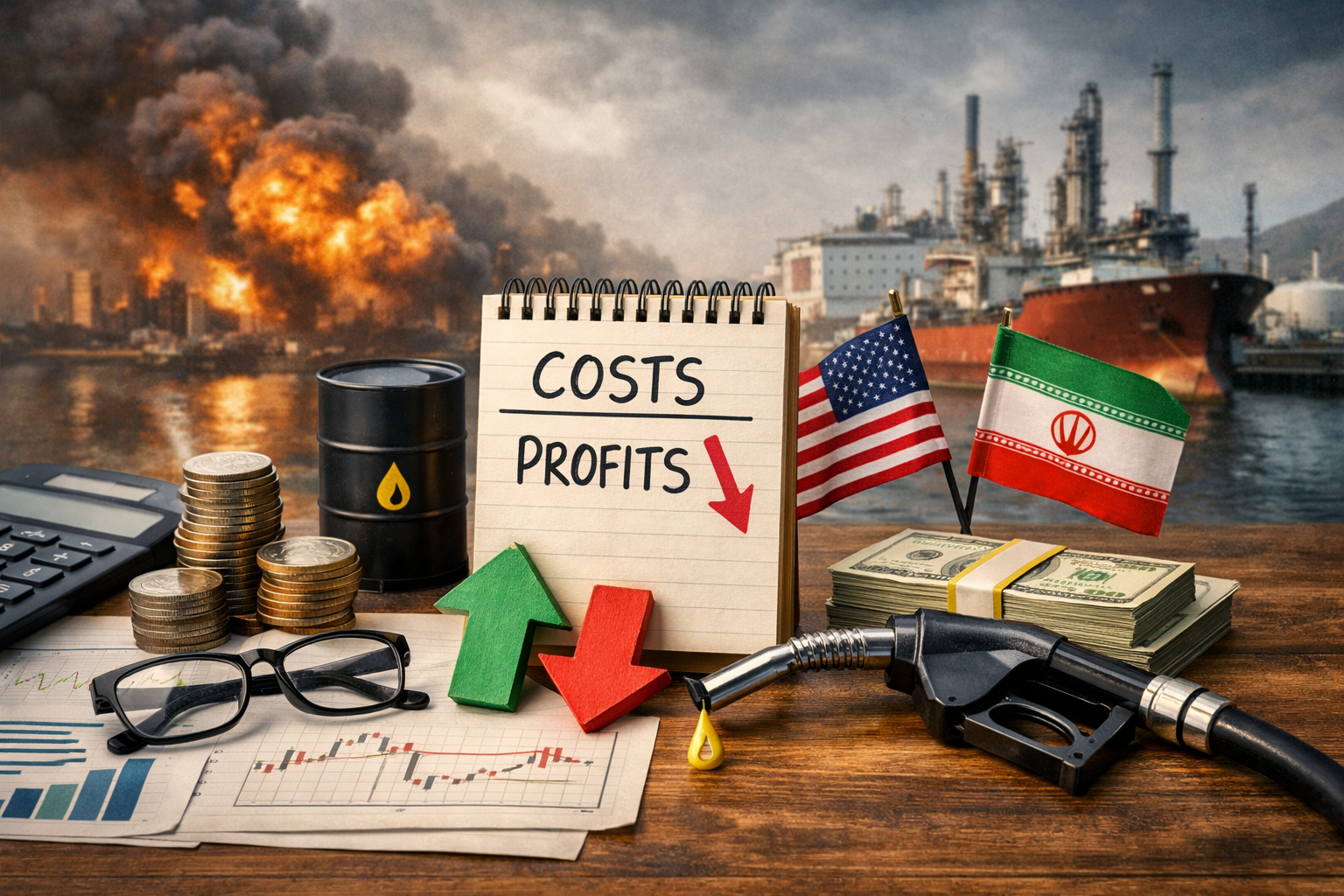
When people hear about war, they usually think about politics.
Business owners should think about costs, margins, and cash flow.
That is because global conflict can raise fuel costs, shipping costs, vendor pricing, and overall inflation. Over time, those higher costs can quietly reduce profit even if sales still look fine on the surface.
The question is not just whether the economy feels uncertain. The real question is whether your business is still making enough money on each sale.
1. Why War and Inflation Matter to Business Owners
A lot of owners hear news about war, oil, or inflation and assume it mainly affects large corporations or international markets.
But those problems often reach small and midsize businesses very quickly.
- Fuel becomes more expensive.
- Shipping and delivery costs rise.
- Materials and supplies cost more.
- Vendors adjust pricing.
- Customers become more careful with spending.
When that happens, a business can feel pressure from both sides. Costs rise while customers become more sensitive to price.
2. The One Thing to Do Before Hard Times Hit
If you only do one thing, do this: protect your margins early.
Many people say the main thing is cash flow, and cash flow absolutely matters. But cash flow usually weakens after margins weaken.
If your costs go up and your pricing stays the same, profit per sale starts shrinking. After that, cash gets tighter. Then decisions get harder.
Healthy margins help protect cash flow. Weak margins usually show up later as cash flow stress.
3. Why This Matters More Than Most Owners Realize
A business does not usually get into trouble all at once.
It often happens slowly.
- You keep selling, but each job is less profitable.
- Your vendors charge more, but you do not adjust fast enough.
- Your revenue still looks decent, but your leftover cash gets thinner.
- You start working just as hard for less margin.
That is why owners can feel confused. They are busy, revenue may still be coming in, but the business feels tighter every month.
4. What Protecting Margins Actually Means
Protecting margins does not mean panicking or raising prices without thinking.
It means getting clear on what your numbers are really saying right now.
- Which services or products are still strongly profitable?
- Which jobs are taking too much time for the money?
- Which costs have increased in the last few months?
- Are you charging enough based on today’s costs, not last year’s?
- How much room do you have if sales slow down?
Those questions matter a lot more during uncertain times.
5. Revenue Alone Does Not Tell the Full Story
One of the biggest mistakes business owners make is assuming that if sales are still coming in, everything is okay.
But revenue by itself does not tell you much.
A business can have strong sales and still be under pressure if pricing is off, labor is too high, waste is growing, or direct costs keep rising.
That is why margin review is so important. It helps you see whether your revenue is actually producing healthy profit.
6. What to Review Right Now
If you want to prepare in a practical way, start here:
- Review your gross margin by service or product.
- Look at recent increases in labor, fuel, materials, shipping, and vendor costs.
- Identify underpriced work.
- Check whether your pricing still fits today’s reality.
- Project what happens if sales soften for the next few months.
Sometimes the answer is a price adjustment.
Sometimes it is better job selection, stronger minimums, better budgeting, or tighter cost control.
The point is to know before you are forced to react under pressure.
7. The Businesses That Usually Handle Hard Times Best
It is usually not the businesses with the biggest revenue.
It is the businesses that understand their numbers early and make adjustments before the pressure gets worse.
- They know their true margins.
- They know what is worth selling and what is not.
- They know where money is leaking.
- They know what changes to make before cash flow gets tight.
That gives them more options, and options matter a lot in uncertain times.
8. Final Thought
If war, inflation, and higher operating costs continue to affect the economy, the businesses that respond early will be in the strongest position.
So if you only do one thing right now, do this:
review and protect your margins before the pressure reaches your cash flow.
That one step can lead to better pricing, better budgeting, better decisions, and a healthier business going into uncertain times.